Adult Film Mogul Sues U.S. Marshals Over Prison Placement, Citing Safety Risks
LEGAL NEWS
STRAIGHT



Michael James Pratt, the former operator of the notorious GirlsDoPorn website and one of the most high-profile sex trafficking defendants in recent years, has filed a federal lawsuit accusing the U.S. Marshals Service of placing his life in danger by assigning him to a prison he says cannot protect inmates convicted of sex crimes.
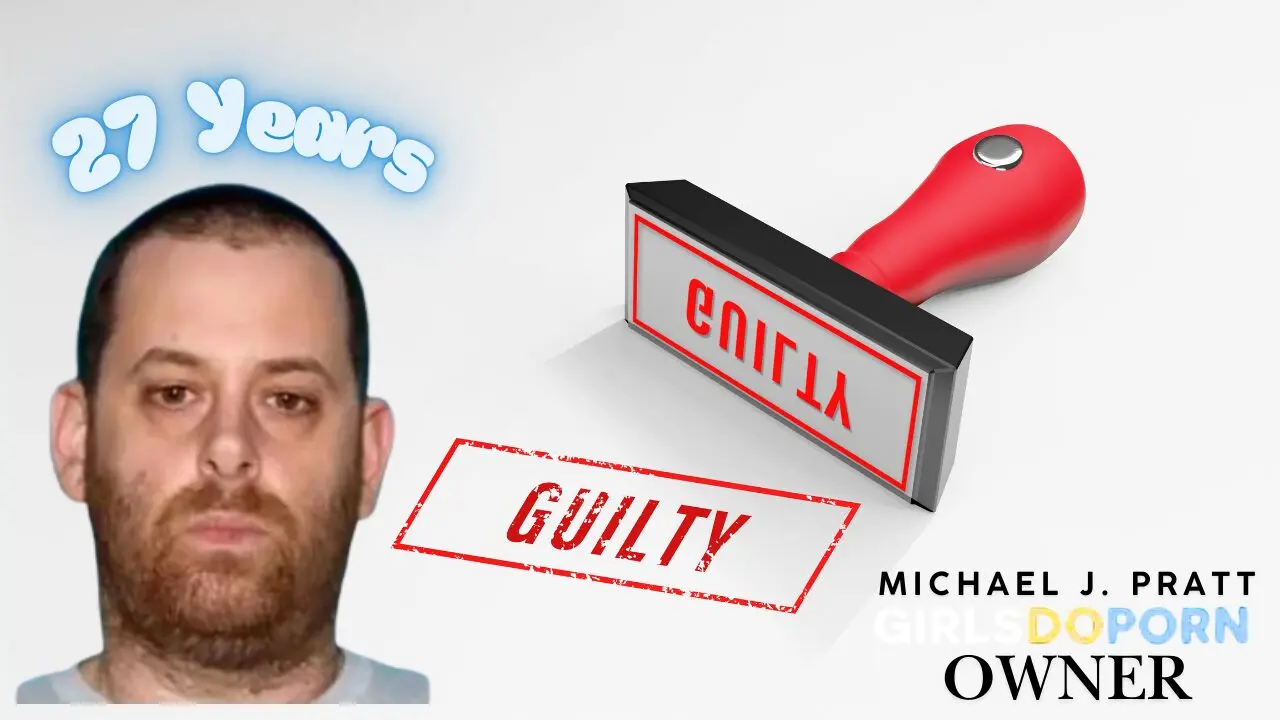
Michael James Pratt, sentenced in September to 27 years in federal prison for sex trafficking, fraud, and coercion, submitted the handwritten complaint earlier this month. He argues that officials are violating established safety protocols by preparing to send him to the Federal Correctional Institution in Victorville, California, a facility he describes as unsafe for prisoners with “bad charges,” the term commonly used in the prison system for sexual offenses.
In his filing, Pratt claims Victorville has a “high incidence rate of inmate assaults” and alleges the Marshals Service has refused to place him in a prison with a dedicated Protective Custody Unit. “Doing so endangers his health and safety and places him in substantial risk of harm,” Pratt wrote.
Court documents include statements from other incarcerated individuals who echo Pratt’s concerns. One inmate said he had “witnessed numerous assaults” on prisoners convicted of sex trafficking at Victorville. Another referred to the institution as “Victimville,” arguing that the risks for offenders like Pratt are well known within the federal system.
The Bureau of Prisons has not publicly responded to Pratt’s lawsuit. Records indicate he remains housed at the Western Region Detention Facility while awaiting transfer.
Pratt’s safety complaint follows his dramatic sentencing hearing earlier this year, where dozens of women confronted him in court. From 2012 to 2019, Pratt orchestrated a sophisticated scheme that lured young women—many between 17 and 23 years old—from across the country to San Diego with promises of legitimate modeling jobs.
Operating out of a high-rise penthouse, Pratt and his team used fake talent agencies, shell companies, and paid “references” to reassure recruits that the work was legitimate. After flying the women to San Diego, Pratt’s crew rushed them through dense contracts and pressured them into performing in adult videos under false pretenses. Some were given alcohol or drugs, while others were physically blocked from leaving hotel rooms. Victims later testified that scenes began within minutes of their arrival.
Although Pratt promised that the videos would never appear online, the recordings were uploaded to GirlsDoPorn and to major adult platforms, including Pornhub and YouPorn. Some clips accumulated millions of views. According to prosecutors, Pratt even instructed staff to contact victims’ family members, schools, and churches to drive traffic to the videos—exposing the women to harassment, blackmail, and long-term reputational harm.
Civil lawsuits filed in 2019 helped unravel the operation. While several co-conspirators were arrested, Pratt fled the United States and evaded authorities for three years. He was eventually captured in Madrid in 2022 after being placed on the FBI’s Ten Most Wanted list.
During Pratt’s September sentencing in San Diego, victims delivered searing statements describing the psychological, financial, and professional devastation they endured. Some recounted suicide attempts, ongoing substance abuse, and persistent harassment stemming from the videos’ widespread circulation.
“You are evil, a rapist, and a predator,” one victim said. “It is now your time to suffer for what you did to me and hundreds of others.”
Pratt ultimately pleaded guilty to one count of sex trafficking by force, fraud, or coercion and one count of conspiracy. His co-defendants also received significant federal prison terms. Matthew Isaac Wolfe, his top associate, was sentenced to 14 years. Performer Ruben Andre Garcia, accused by victims of extreme brutality during filming, received 20 years. Other members of the production crew pleaded guilty and were sentenced to additional terms.
Now, Pratt’s legal battle has shifted to the question of where he will serve his time. His lawsuit claims that standard Bureau of Prisons protocols call for inmates convicted of sex offenses to be placed in facilities with specialized protective units. Instead, he argues, he has been assigned to a general-population facility notorious for violence against sex offenders.
Pratt contends the Marshals Service is “aware of the dangers and refuses to act,” leaving him vulnerable to assault once transferred. His complaint asks the federal court to prevent his placement at Victorville and require officials to house him at a facility capable of safely holding inmates convicted of sexual crimes.
Whether the court will intervene remains unclear. For now, Pratt sits in federal custody, awaiting the outcome of a lawsuit that seeks to redefine not his guilt, but the conditions under which he will serve the decades-long sentence handed down for one of the adult industry’s most infamous criminal enterprises.











© 2025 NSFW.Army. All Rights Reserved