When it comes to variants, the expression of sexualities across the queer platform, many people think of specific sex acts: puppy play, BD/SM, various kink scenarios, role play, race play, and the like. Rarely do we think of cruising, as we used to know it before the internet took over, as being an integral part of those sexualities. It was more the introduction, a means to an end. But for many men, the act of cruising in a public setting, the relentless pursuit, was a sexual act in and of itself, as well as a political act saturated with defiance. Because for the time we're talking here, such behavior would have been illegal, especially considering that homosexuality itself was illegal in most places. But a new exhibit of the work by the photographer Arthur Tress, now through Feb 28th at CLAMP in NYC, puts on glorious and uninhibited display the cruising that went on in one of the most famous places for cruising way back in the day: The Ramble in Manhattan's Central Park.
(All images link to their IG post.)
Arthur Tress’s The Ramble, NYC 1969 is published by Stanley Barker

With a corresponding published photo book, Tress's work gives us really the first studied glimpse into this shadowy world of what was fairly common behavior by gay men. Sure, the work here views cruising under the cover of trees, stone, and bridges, but cruising was also an art form that could take place on the streets, in a crowd. It just took ingenuity, a daring to make eye contact, and the reflections in a store window were always helpful.
"The Climber"

As reported recently in The Guardian, The Ramble is a series of tree-lined walkways through rocky mounds in Central Park, located roughly between 75th and 79th streets. Designed by Frederick Law Olmsted in 1857, the intention was to arrange the paths and bridges “to create a degree of obscurity not absolutely impenetrable, but sufficient to affect the imagination with a sense of mystery”. Walking through the area, one sees how the man in front of you comes in and out of view as paths curve and natural structures impede, then reveal, one's target. In the dark of evening, the tucked-away corners and shadows make for perfect cover if you want to have your dalliance right there in the park.
"Sending Signals"

The Ramble was just a 10-minute walk from my apartment on Riverside Drive and 72nd Street. I often took walks there to enjoy a bit of nature while hoping for a friendly chance meeting that could lead to an erotic encounter. I had been interested as a photographer for many years in the contemporary expression of archetypal patterns of tribal behaviour – rules, rituals, symbolic gestures – that still could erupt beneath our daily modern lives. One day I brought my camera with me to capture these dreamlike cultural constructions for a community that I was indeed a knowledgeable member of."
Arthur Tress
"Keeping Watch"

Cruising, especially in this time of active aggression against the gay community, was as filled with anxiety as it was with excitement. The danger could be real. As Tress writes about the photo above, "Sitting on the railings of the 'Meat Rack', a young man’s body language expresses a certain paranoid anxiety. Perhaps this is caused by society’s condemnation of the gay lifestyle, making for a diminished sense of self-esteem and psychological trauma. That mirrored my own stressed feelings towards his ambivalent sexuality."
"Silent Fire"

By the time these photos were taken, The Ramble was overgrown and generally neglected. A perfect location for the clandestine cruising and hooking up by men looking for any physical contact. Tress wrote in 2024, "It was like a decaying pier in the city. I was always attracted to that kind of urban neglect." He took photos either from a long distance or, sometimes, the rare subject would pose for him.

A shirtless young man exuberantly climbs a sunlit tree full of late spring foliage, just a few months before the Stonewall riots, which gave gays a new positive sense of themselves. Although I knew at the time that these photos would not be published for decades, I did realise I was capturing and archiving a historic and transitional moment in queer culture, when the old fearful regimented norms of behaviour were changing to a more open, freer sense of male-to-male connection. They were my own personal way of coming out.
Arthur Tress


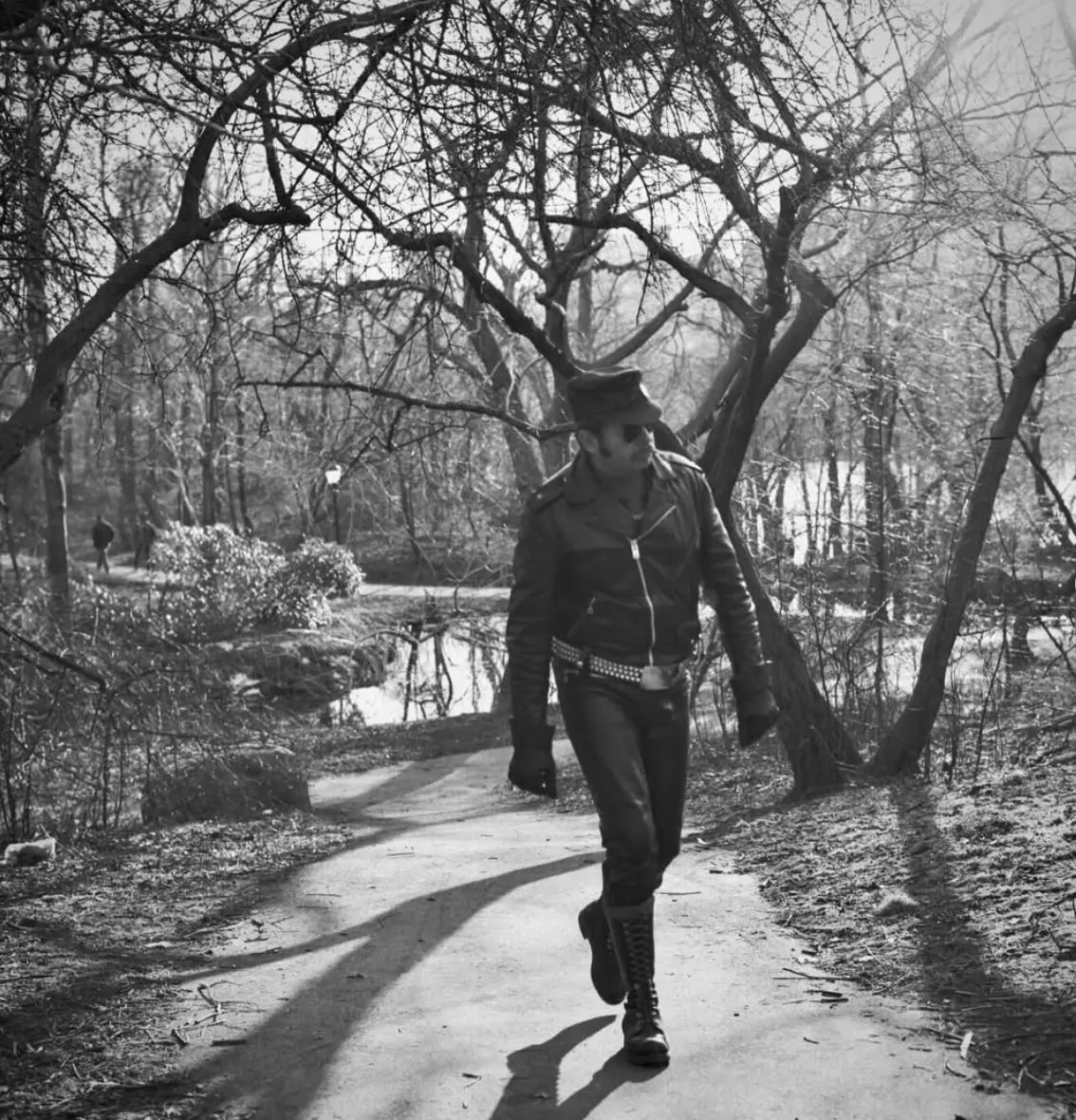
From excitedly frightened young men (Tress says he started going there at 15) to prepsters to leathermen, seasoned queens and suburban newbies, married businessmen and die-hard queers, The Ramble attracted all kinds from all over. The drive to pursue, and sometimes overcome and vanquish one's target, to fulfill a fantasy, was what a stroll through The Branble was for many. Tress said "The layers of guilt and fear of exposure led to a certain kind of behaviour."
"Shadow Play"

The surrealist style of these images would come to define Tress’s central contribution to photography, as exemplified by his scenes of homoerotic fantasy taken on the West Side Piers and at the abandoned Railroad YMCA off Riverside Drive, his primary cruising grounds in the 1970s. For the shy artist, the Ramble project provided an excuse to approach men, often lounging about on crags like forlorn lovers in A Midsummer Night’s Dream.
Historian Jackson Davidow, in an essay for the book publication.

Pick up your copy of Arthur Tress’s The Ramble, NYC 1969 here at Stanley/Barker.
Questions? Comments? Email us at [email protected]
Follow us on Twitter and Instagram.










© 2026 NSFW.Army. All Rights Reserved