Controversial adult content creator Bonnie Blue ignited fresh debate over artificial intelligence and consent this week after sharing an AI-generated image depicting her in bed with heavyweight boxing star Anthony Joshua, days after his knockout victory over Jake Paul.
The image, posted to Instagram, shows Blue appearing asleep under a blanket while a shirtless Joshua smiles at the camera, holding what appears to be a Cartier engagement ring box. Bonnie Blue accompanied the post with a caption referencing the Dec. 19 bout.
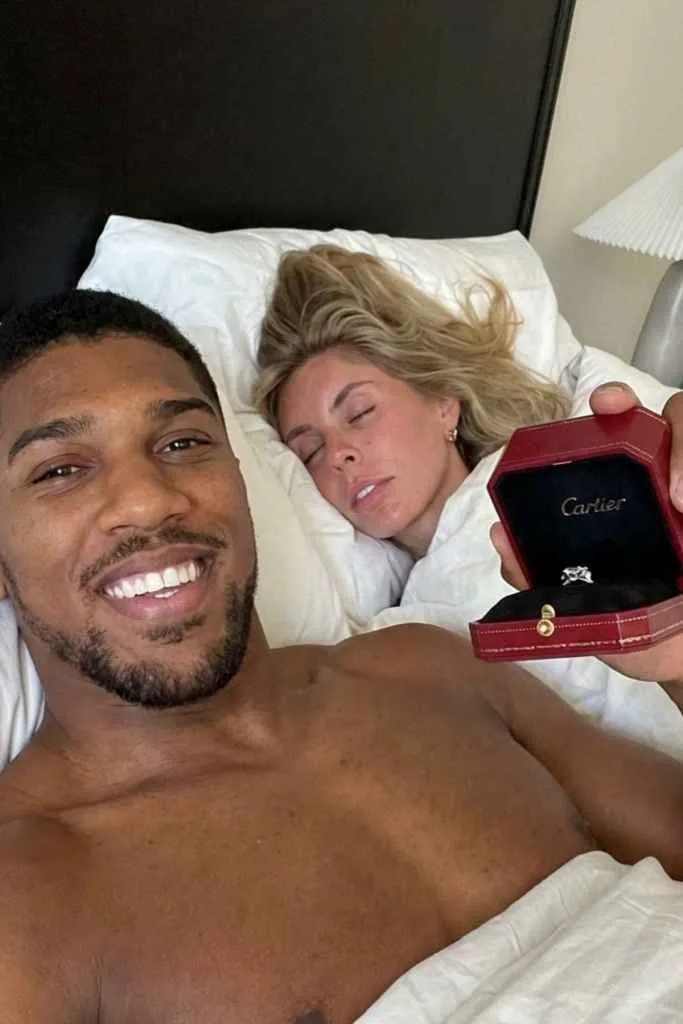
Photo Credit: X @BonnieBlue_xoxo
“Jake Paul and @jakepaul both went six rounds with @anthonyjoshua Friday night, and my jaw is still intact,” she wrote.
The caption was a pointed reference to Paul’s injury during the fight. The heavyweight bout was scheduled for eight rounds but ended in the sixth after Anthony Joshua landed a decisive punch. Paul later confirmed he suffered a double broken jaw, underwent surgery, had two titanium plates installed, and lost several teeth.
“Surgery went well, thanks for all the love and support,” Paul wrote in a post-fight update. “Have to have only liquids for seven days.”
While some users found Bonnie Blue’s post humorous, others expressed discomfort with the use of AI to create an intimate scenario involving a real person. Comments ranged from praise for the joke to criticism over consent and digital boundaries.
“Funny but creepy,” one user wrote. Another commented, “This is not right.”
The controversy places Bonnie Blue’s post squarely within a growing national conversation surrounding AI-generated imagery and consent, particularly as lawmakers consider the TAKE IT DOWN Act.
Take it Down Act was a federal law signed by President Trump in May 2025.making it a federal offense to share nonconsensual intimate imagery (NCII) and "digital forgeries" (deepfakes) without consent,
The law aims to combat the creation and distribution of nonconsensual intimate images, including AI-generated or digitally altered content that places real people in sexual or suggestive situations without permission.
Although Bonnie Blue’s image does not depict nudity, legal experts have noted that intimacy under the proposed law is not limited to explicit content. Suggestive bedroom scenarios involving real, identifiable individuals could qualify, depending on intent, impact, and whether harm is alleged by the person depicted.
In this case, there has been no public indication that Anthony Joshua consented to the image or objected to it. Under the TAKE IT DOWN Act framework, enforcement would largely depend on a complaint from the individual whose likeness was used. Without such a request, platforms are unlikely to intervene.
The incident highlights how AI imagery can exist in a legal gray area, particularly when framed as satire or humor. It also underscores why lawmakers introduced the legislation in the first place, as AI tools have made it increasingly easy to create realistic images involving real people with little effort or technical skill.
Bonnie Blue’s post is not her first brush with controversy. Earlier this month, she was arrested in Bali, Indonesia, after police raided a production studio linked to her “Bang Bus” tour. Producing pornographic material is illegal in Bali, and she initially faced the possibility of severe penalties.
She was later cleared of criminal charges, deported, and fined. According to the BBC, Indonesian immigration officials also requested that she be blacklisted, preventing her return to the country.
Many are calling the entire incident a publicity stunt. And it's hard to argue that it isn't the case, especially when she continues to pull stunts like her most recent deepfake.









© 2026 NSFW.Army. All Rights Reserved